DIY Deck Construction Guide: Advice for the Determined Homeowner
The DIY Deck Building Guide offers useful information for homeowners seeking to improve their exterior living areas. It stresses the critical role of material selection, location, and design. Each step in the building process is essential for achieving a practical and visually appealing deck. Yet, many fail to recognize typical obstacles that may emerge during construction. Understanding these challenges can make a significant difference in the overall success of the project. What factors should homeowners evaluate before starting?
Choosing the Right Location for Your Deck
When determining the optimal spot for a deck, what elements should be evaluated? Starting with the basics, the solar exposure plays an essential role. A southward orientation can deliver abundant light, ideal for relaxation, while a northward orientation might offer more shade. Additionally, evaluating the terrain is vital; a level surface simplifies construction and enhances stability. Proximity to the house is another key consideration, as it promotes easy access and regular use. Moreover, regional zoning regulations and boundary lines must be examined to ensure adherence.
Landscaping elements, such as shrubs and trees, can enhance privacy and add aesthetic value but may also require maintenance. Lastly, thinking about the primary purpose of the deck—whether for dining, entertaining, or relaxing—will determine its ideal location. By carefully examining these factors, homeowners are able to select a spot that enhances both enjoyment and functionality.
How to Create an Effective Deck Design Plan
An effective deck design plan is vital for making sure the final result satisfies both practical and visual requirements. Residents should commence by examining their personal requirements, such as the desired uses for the deck—whether for hosting gatherings, unwinding, or alfresco meals. It's necessary to think about the proportions and form of the deck in relation to the existing area, guaranteeing that it enhances the established architectural style and natural environment.
Next, residents should design a layout that includes elements like seating, guardrails, and integrated planters. This design should demonstrate smooth navigation and access, enabling easy movement. Furthermore, property owners must factor in compliance with municipal codes and regulations.
Ultimately,incorporating design elements including color palettes, materials, and light fixtures will elevate the aesthetic appeal. By thoughtfully blending practicality with design considerations, a thorough deck layout plan can significantly enhance exterior living experiences.
Essential Materials for Deck Building
Picking the right materials is a key step in the deck construction process, subsequent to the thorough design plan established earlier. Homeowners must explore numerous options, including plastic, wood, and composite materials. Pressure-treated wood is still a common choice due to its durability and affordability. That said, it demands consistent care to avoid decay.
Composite decking presents an easy-care solution, combining wood fibers and plastic, although it can involve a greater upfront investment. For homeowners desiring a more organic look, premium hardwoods such as teak or ipe deliver remarkable lifespan and elegance though they necessitate thoughtful maintenance and treatment.
Beyond decking boards, key materials consist of strong posts, beams, and joists, which constitute the deck's structural support. Fasteners, such as screws and brackets, should be chosen based on material compatibility to guarantee stability. Additionally, railings and balusters improve safety while contributing elegance to the deck's appearance.
Deck Building: Step-by-Step Instructions
During the process of building a deck, having a clear grasp of the needed materials is vital to achieving success. A well-defined step-by-step method will lead individuals through every stage of the building process, making certain the resulting structure is both strong and safe. Furthermore, safety measures should be given top priority to safeguard all individuals participating in the project.
Materials You'll Need
Building a deck necessitates thoughtful evaluation of the resources needed to achieve durability and aesthetics. Homeowners should start by choosing top-grade timber, such as pressure-treated wood, cedar, or composite materials, which provide protection against rot and pests. Hardware components, including galvanized screws and brackets, are vital for overall stability. A protective stain or sealant will guard the wood against weathering and UV rays, extending its lifespan. Additionally, homeowners will need support posts and concrete footings, ensuring a solid foundation. Personal safety items, including gloves and goggles, is essential for safeguarding yourself during the building process. Finally, instruments such as a circular saw, level, and drill will support the overall build, making it faster and more accurate.
Step-by-Step Procedure
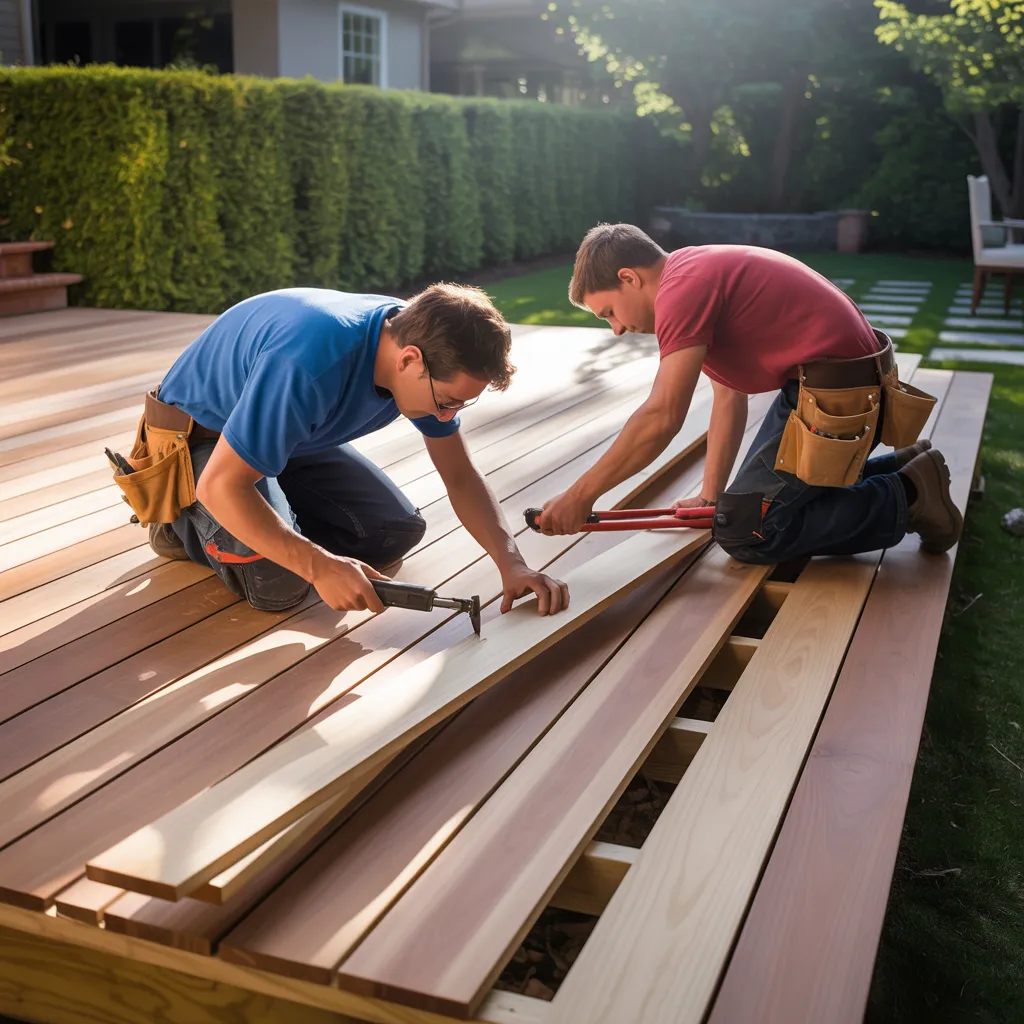
After gathering all essential materials, the next stage entails implementing a structured method for deck construction. The workflow starts with outlining the design with stakes and string to mark the deck's measurements. After that, the footings are dug out and concrete is set to establish a solid base. Upon curing of the footings, the copyright board is fixed to the house. After this step, the framing is built, incorporating joists spaced evenly for structural integrity. The decking boards are then positioned transverse to the joists, attached securely. Railing posts are installed at specified points, with the railing assembly for protection and visual enhancement. Lastly, any finishing touches, such as sealing or staining, are incorporated to improve longevity and aesthetics.
Essential Safety Precautions
Before starting on deck construction, it is crucial to put safety first to minimize the risk of accidents and injuries. Homeowners should equip themselves with appropriate personal protective equipment (PPE), including safety goggles, gloves, and sturdy footwear. Furthermore, making the work area secure is essential; this may include placing barriers to ensure children and pets are kept out of the construction zone. Using ladders correctly is crucial, along with confirming it is steady and correctly positioned. Homeowners must also be aware of their surroundings, particularly overhead power lines. As well, maintaining well-organized and properly functioning tools can help avoid mishaps. To conclude, familiarizing oneself with the materials and their proper handling will improve safety during the deck building process, leading to a successful and secure outcome.
What Not to Do When Building Your Deck?
Avoiding common pitfalls is vital for a successful deck-building endeavor. A significant error involves failing to review local building codes and zoning regulations, which can lead to significant fines or necessary alterations. Moreover, overlooking the importance of proper drainage can result in pooling water discover more that harms both the deck and adjacent spaces. A frequent mistake involves selecting substandard materials; this can weaken the deck's overall strength and longevity.
Inadequate support is another critical issue; placing too much weight on the deck or failing to use enough joists may create dangerous conditions. It is common for homeowners to underestimate the value of exact measurements, leading to uneven surfaces or components that are not properly aligned. At the end of the day, hurrying through the project often results in corner-cutting that diminishes durability. Steering clear of these common errors allows homeowners to ensure a sturdier, longer-lasting deck that improves their outdoor living area.
How to Maintain Your Deck for Longevity
Caring for a deck calls for a systematic approach to secure its durability. Developing a routine cleaning program and undertaking routine inspections can notably boost the lifespan of the structure. These steps assist in identifying potential problems early and keep the deck at its best.
Standard Cleaning Schedule
A consistent cleaning schedule is essential for protecting the condition and look of a deck over time. Homeowners should aim to clean their decks at least two times a year, ideally in the spring and autumn. This practice helps clear away dirt, debris, and mold that can build up and lead to deterioration. Using a broom or leaf blower to remove loose debris is a straightforward first step. For more thorough cleaning, a mixture of water and mild detergent can be worked in with a soft-bristle brush, followed by careful rinsing. Close attention should be paid to areas around furniture and railings, where residue is more likely. Regular cleaning not only elevates the deck's appearance but also greatly increases its longevity.
Seasonal Checkup Recommendations
Once you have established a consistent maintenance routine, homeowners should prioritize seasonal inspections to ensure the deck remains in ideal condition. As spring arrives, homeowners need to inspect for winter damage, such as loose boards and damaged railings. Summer inspections focus on examining the structural soundness of the wood and ensuring that fasteners are secure. During the fall season, property owners need to remove debris while checking for mold or mildew growth, which tends to flourish in moist environments. Lastly, winter checks should address snow accumulation and ice buildup, since these elements can place stress on the structure. Regularly applying sealants and stains during inspections will further protect against the elements. Through the implementation of these seasonal guidelines, homeowners can extend the life of their deck while preserving its visual charm.

Commonly Asked Questions
Do I Need a Building Permit for a Deck?
Whether a permit is necessary for building a deck varies based on local regulations. In most cases, homeowners should reach out to their local building department to understand specific requirements and confirm compliance with zoning laws and safety standards.
How Do I Find the Right Contractor for My Deck Project?
To select the best professional for a deck, homeowners should research qualifications, check references, compare estimates, guarantee proper licensing, and assess interpersonal skills. Reliability and expertise in deck building are crucial for a smooth project.
What Is the Optimal Season for Deck Building?
Spring and early fall are regarded as the ideal seasons for deck construction. Moderate temperatures and reduced humidity encourage efficient project completion, while bypassing severe weather conditions ensures proper material adhesion and strengthens the overall durability of the finished structure.
Can I Build a Deck on a Slope?
Certainly, a deck can be built on a slope. That said, meticulous planning and reliable structural support are required to maintain structural integrity and safety. Approaches like post-and-beam framing or terracing might be necessary for successful outcomes.
What Is the Best Way to Budget for My Deck Project?
When budgeting for a deck project, one should account for tools, materials, labor, permits, and unexpected costs. Developing a thorough estimate and setting aside a contingency fund will help manage costs effectively throughout the construction process.